
The day began with a lovely continental breakfast at Bale Gaja Resto, the in-house restaurant of Purana Ubud Suite and Spa, where we’re staying. Bale Gaja translates to House of Elephant in Balinese. one of many words that closely resemble those in Indian languages. In fact, many of their customs and rituals feel strikingly familiar, reminiscent of what I’ve seen in South India.
Our driver for the day was Made (pronounced Maadé) Juli, and his name opened the door to an interesting glimpse into Balinese social culture. Here, birth order determines a person’s name prefix: the firstborn is Wayan, the second Made, the third Nyoman, and the fourth Ketut. For instance, Juli’s wife is Wayan Chitra, the eldest in her family. Simple, structured, and easy to follow—much like our Barki, Mejki, and Chutki—except we don’t formally attach these to our names!
Our first stop was at Gunung Kawi
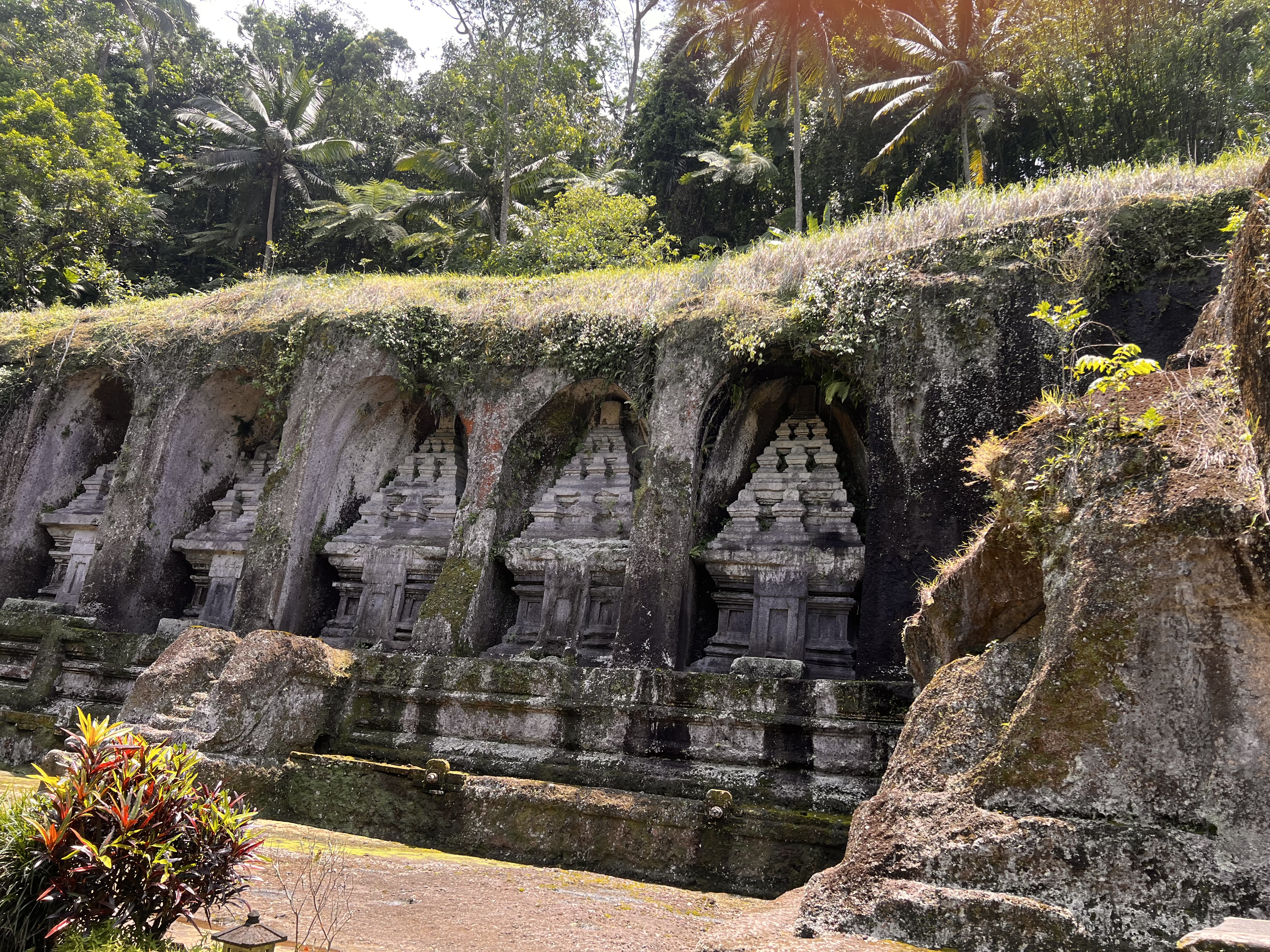
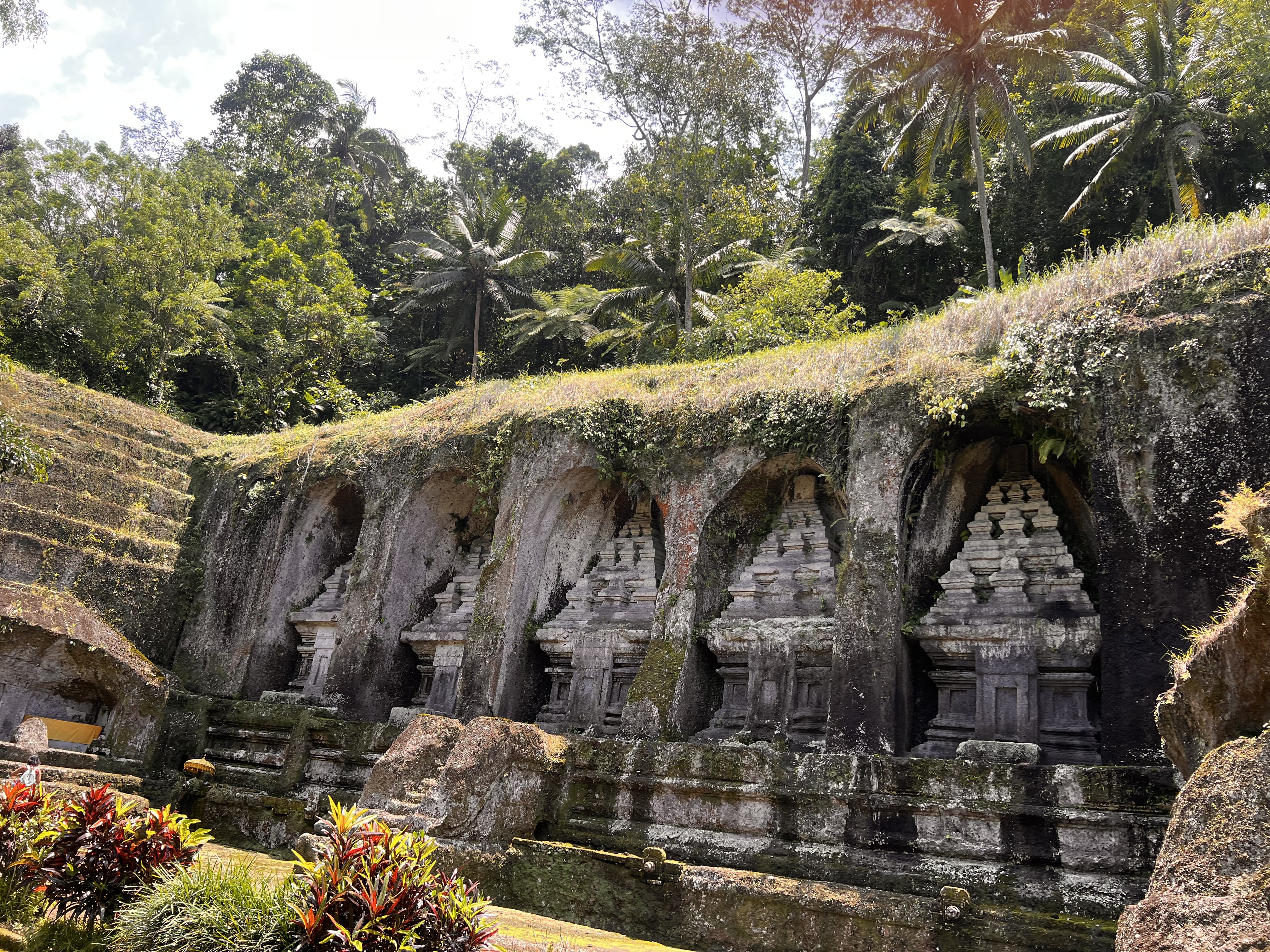
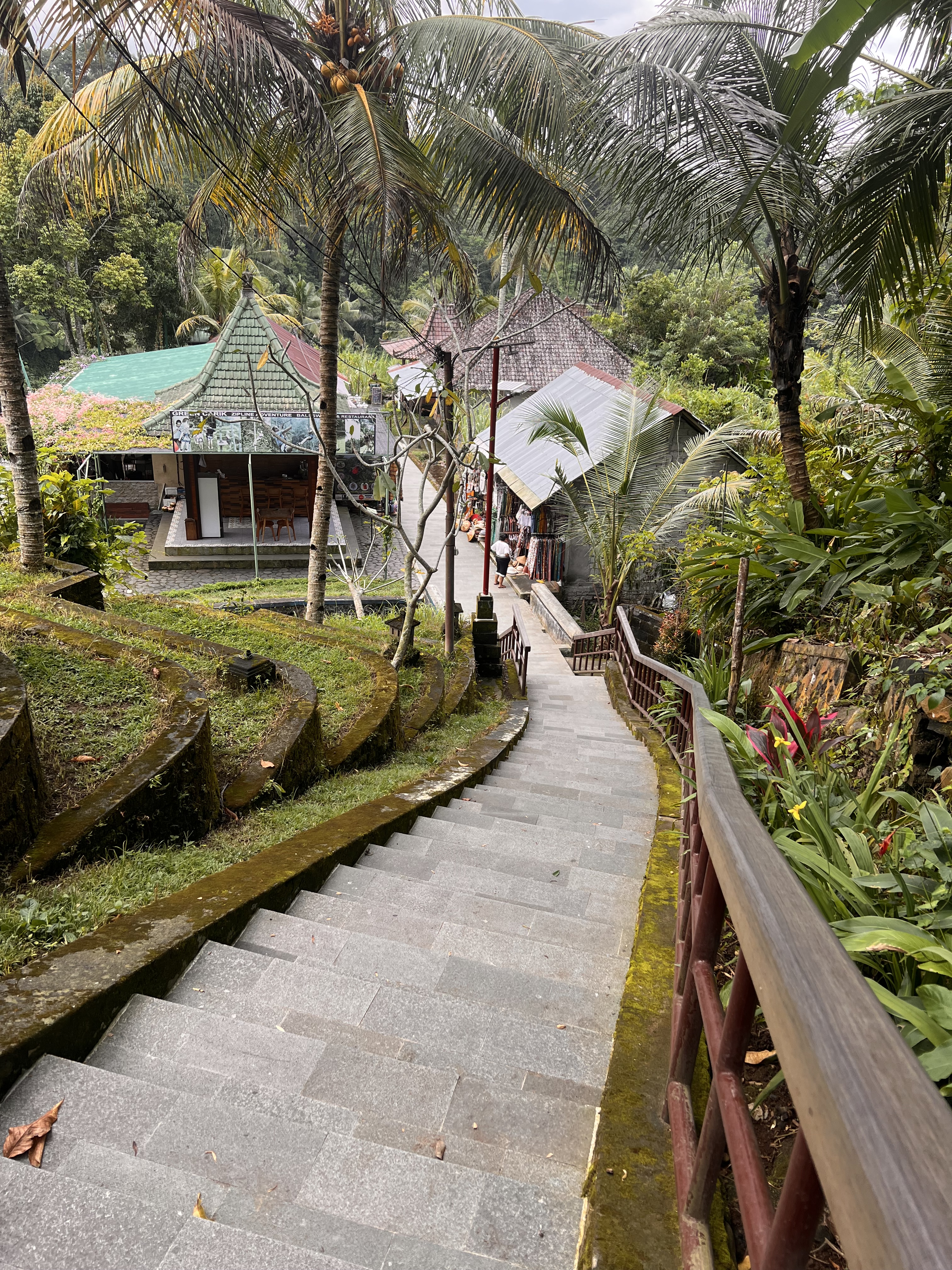
Gunung Kawi is an 11th-century temple and funerary complex renowned for its rock-cut shrines carved directly into the cliffs of the Pakerisan River gorge. It is believed to be dedicated to King Anak Wungsu and his queens. It was an amazing site as we have never seen such shrines that have been carved on rock faces.
Getting there, however, is its own pilgrimage—372 stone steps down and then back up! I made the trek, huffing and puffing like a tired dog at the end of a long, exhausting day.
and, after that experience, I was ready to collapse, but I pulled myself up and went to the next stop.




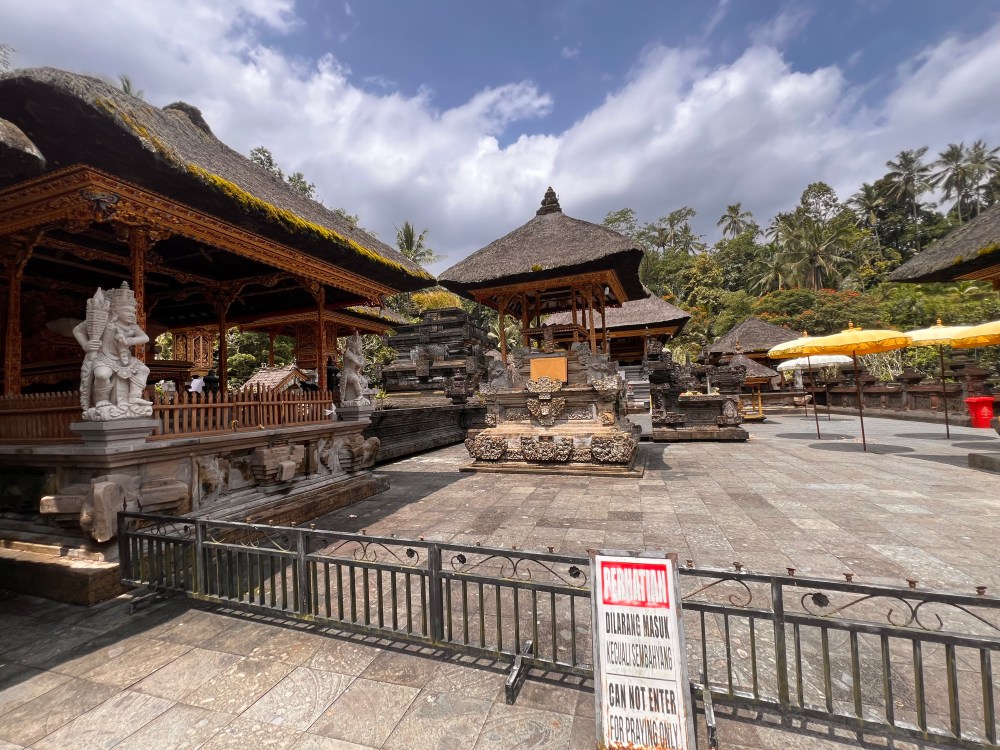
Next stop: Holy springs of Tirta Empul
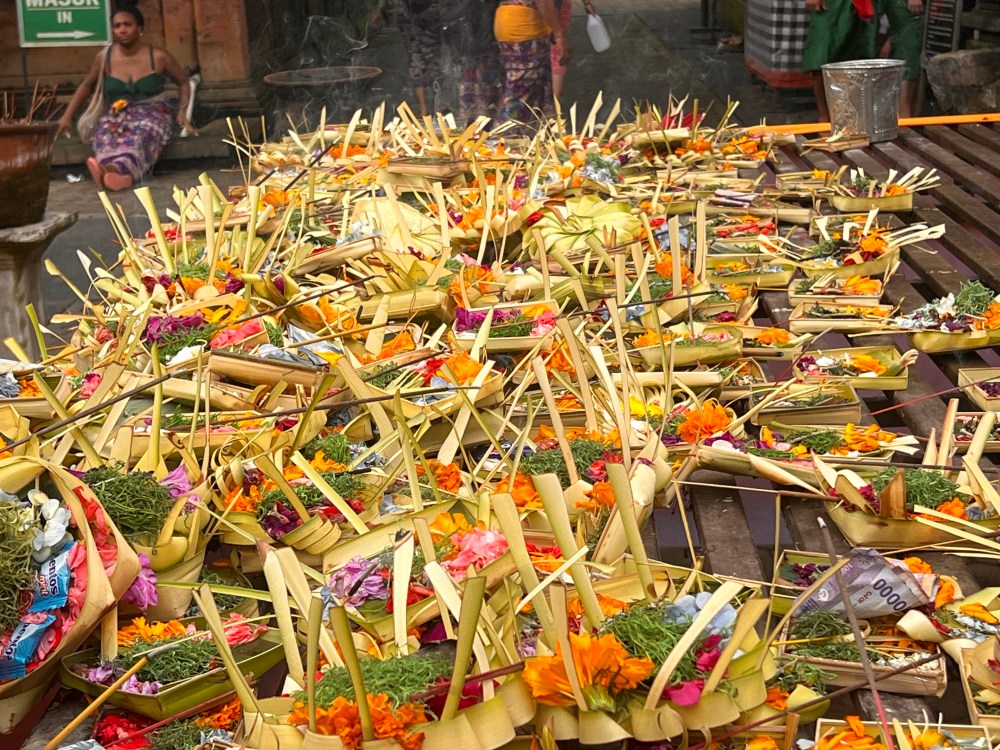
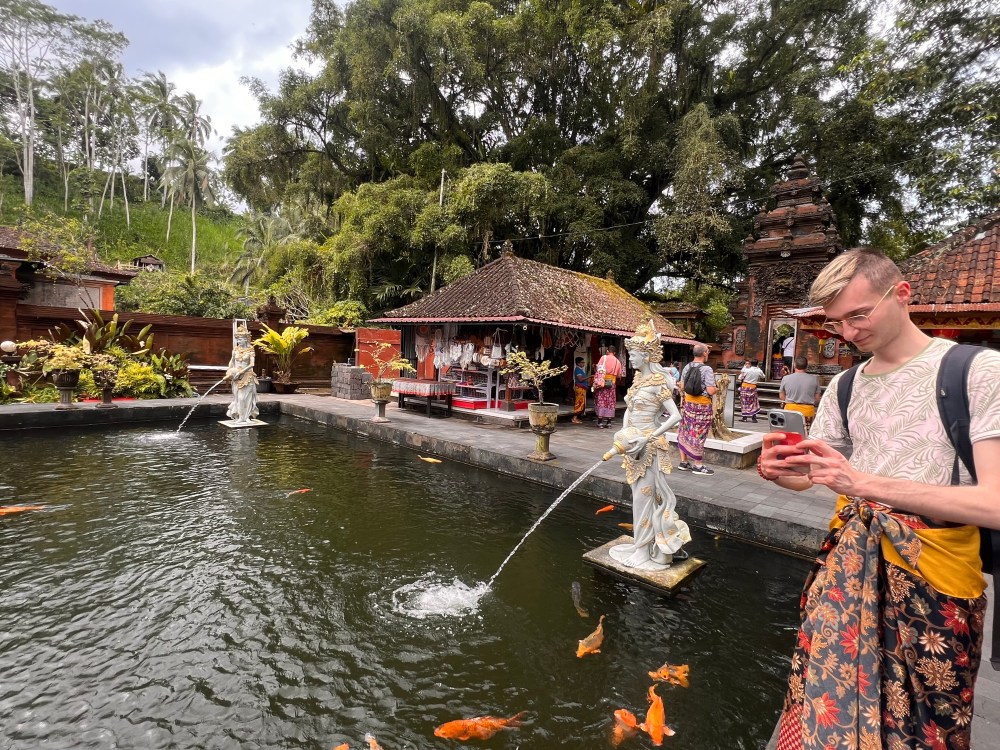
Tirta Empul is a temple of Holi Spring. The water is a cold water spring. Balinese people visit here a couple of times per year or every full moon if they are from this area, specifically at the time of death or marriage … Non-Hindu Indonesians also visit, so irrespective of religion, all are welcome at the Holy Spring Temple.
In more recent times, international travellers staying in Ubud have also included a visit to Tirta Empul to find out more about Balinese water purification. They take a dip in the holy spring to find inner peace.
My cynical mind tells me that it is more an impact of the book/movie called “Eat, Pray, Love” but then, why question faith? If people believe they can heal their beings, so be it.
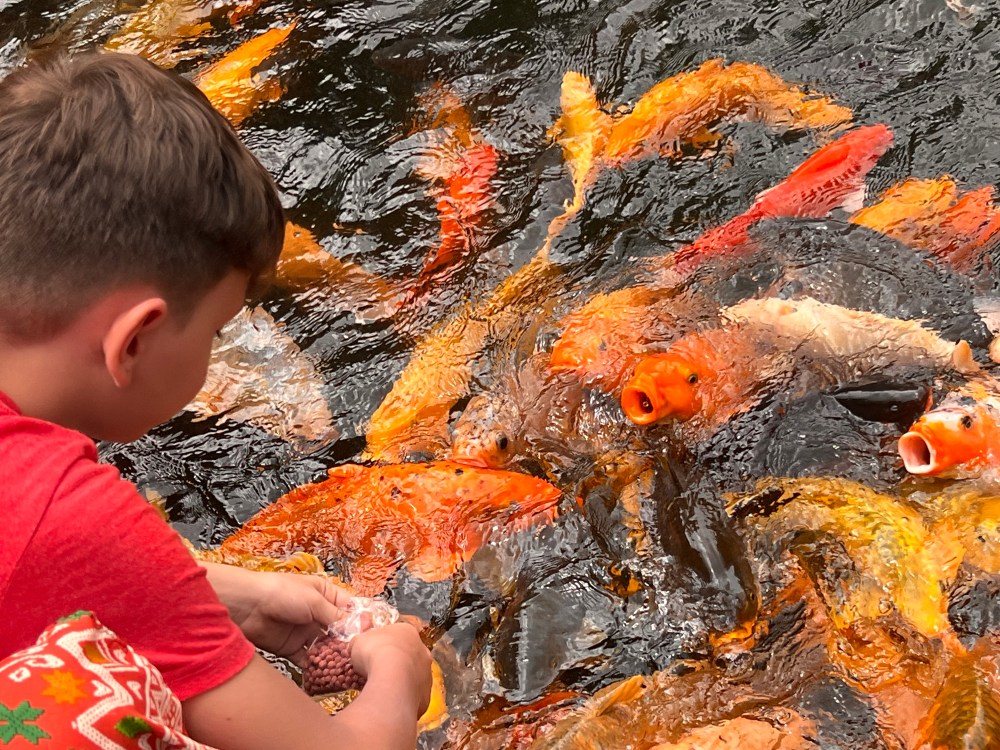
The temple complex is serene, calm, pretty as most of Bali is. Surrounded by beautiful sculptures, gardens and temples, it is a space for contemplation and relaxation.






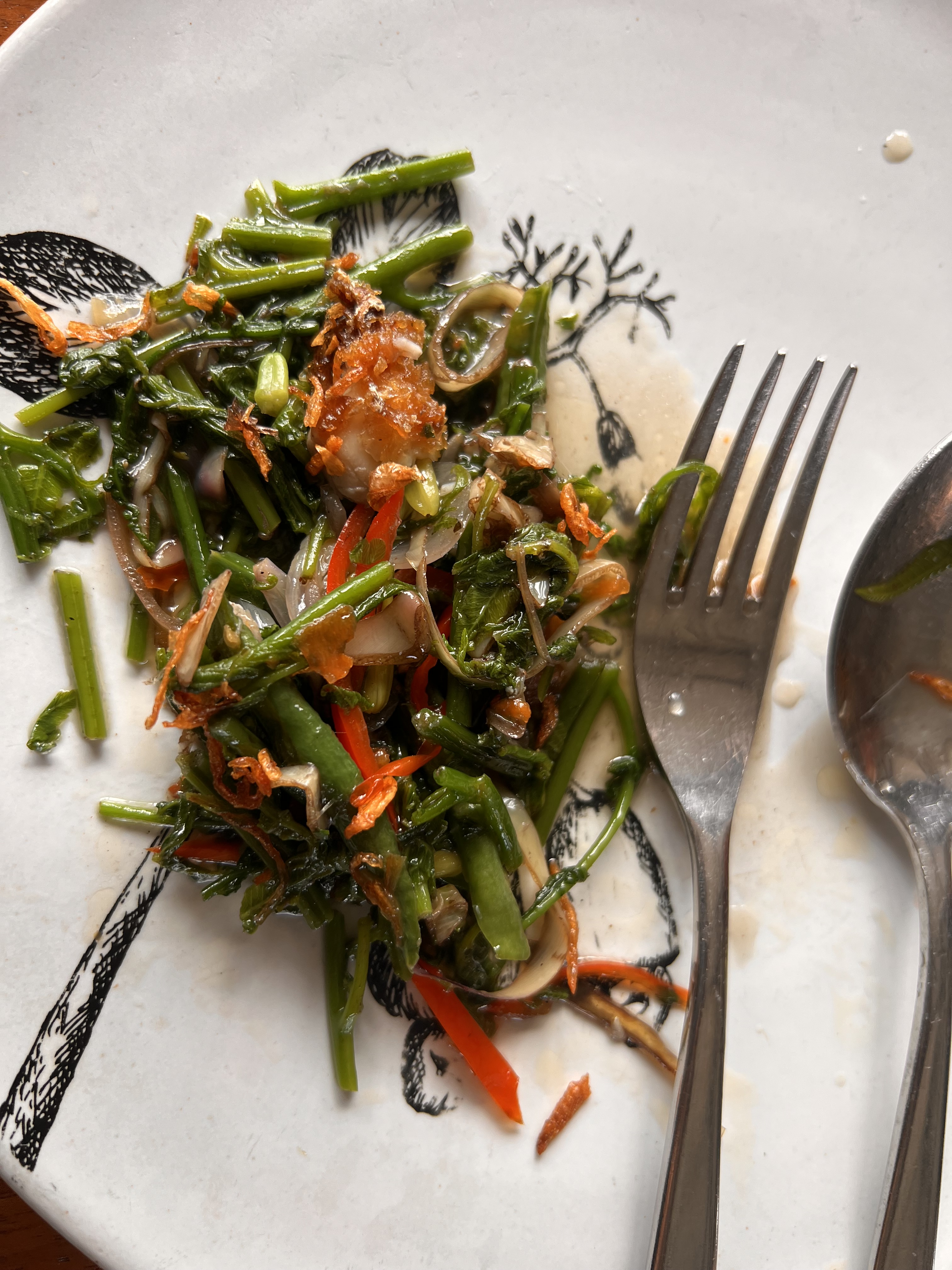
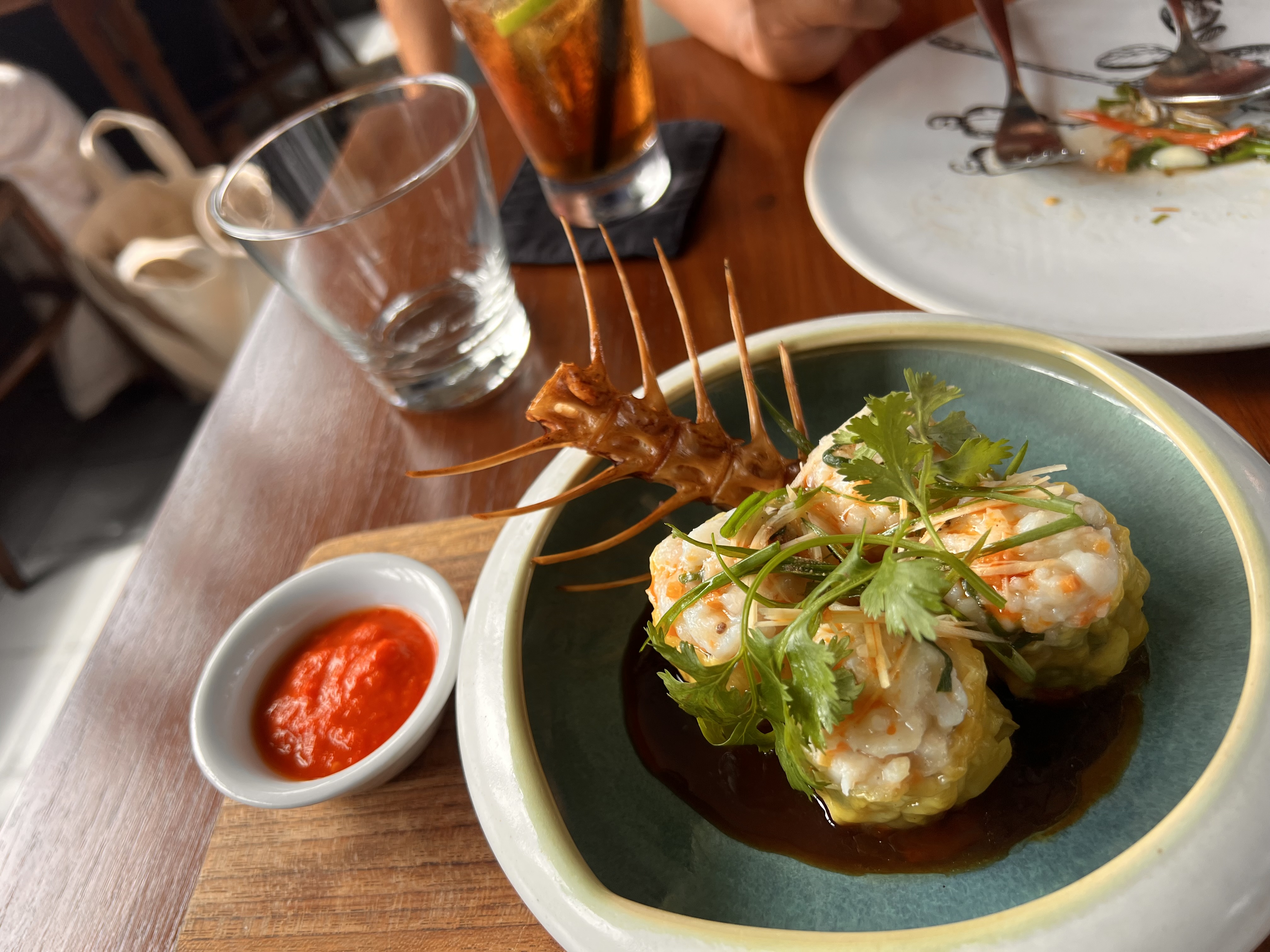
Lunchtime beckoned, so we made our way to the posh part of Ubud. Hujan Locale Restaurant did not disappoint—the food was sumptuous, to say the least. We indulged in octopus, fish, and prawn dishes, all cooked in the rich, traditional Balinese style.
Leaving you tonight with some snapshots of our feast.
Tomorrow is another day!



 Sarbari's Blog