
Goa Gajah meaning “The Elephant Cave”, is located on the island of Bali near Ubud.
Although the exact origins of the cave are uncertain, it is believed to have been built as a place for spiritual meditation. One folklore relates that it was created by the fingernail of the legendary giant Kebo Iwa. However, examining its style, the sanctuary was probably dated from the 11th century Bali Kingdom. The complex contains both Hindu and Buddhist imagery, as the cave contains lingam and yoni, symbols of Shiva and the image of Ganesha, , while by the river there are carved images of stupas and chattra, imagery of Buddhism.
The cave was rediscovered by Dutch archaeologists in 1923, but the fountains and bathing pool were not discovered until 1954.

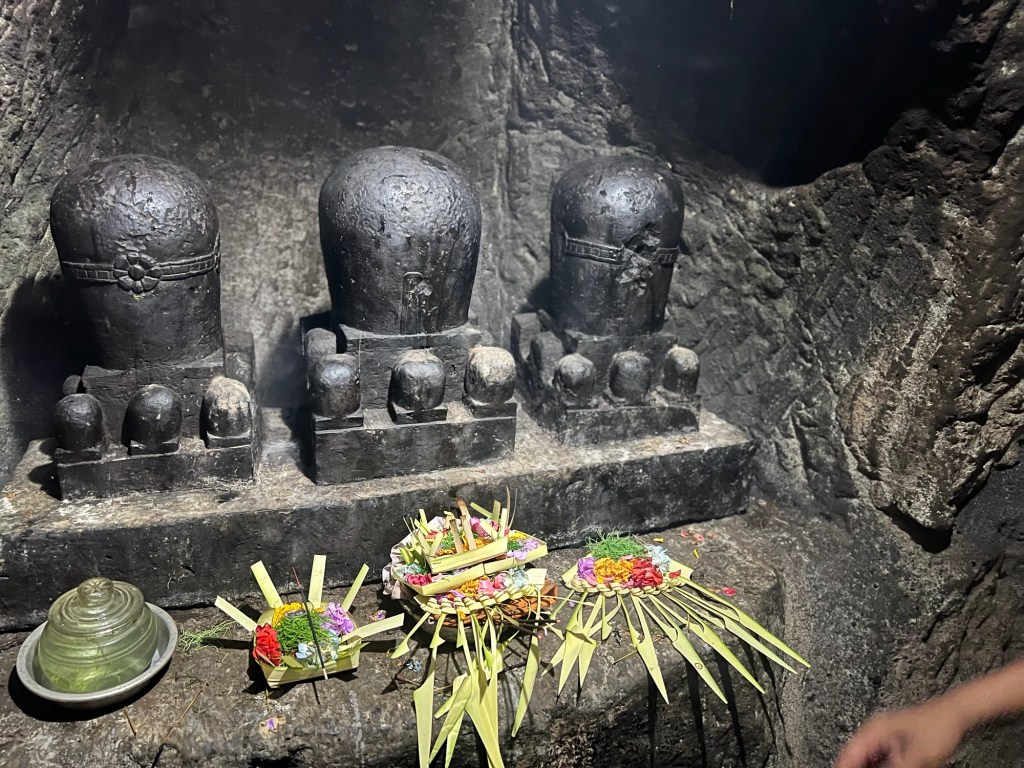
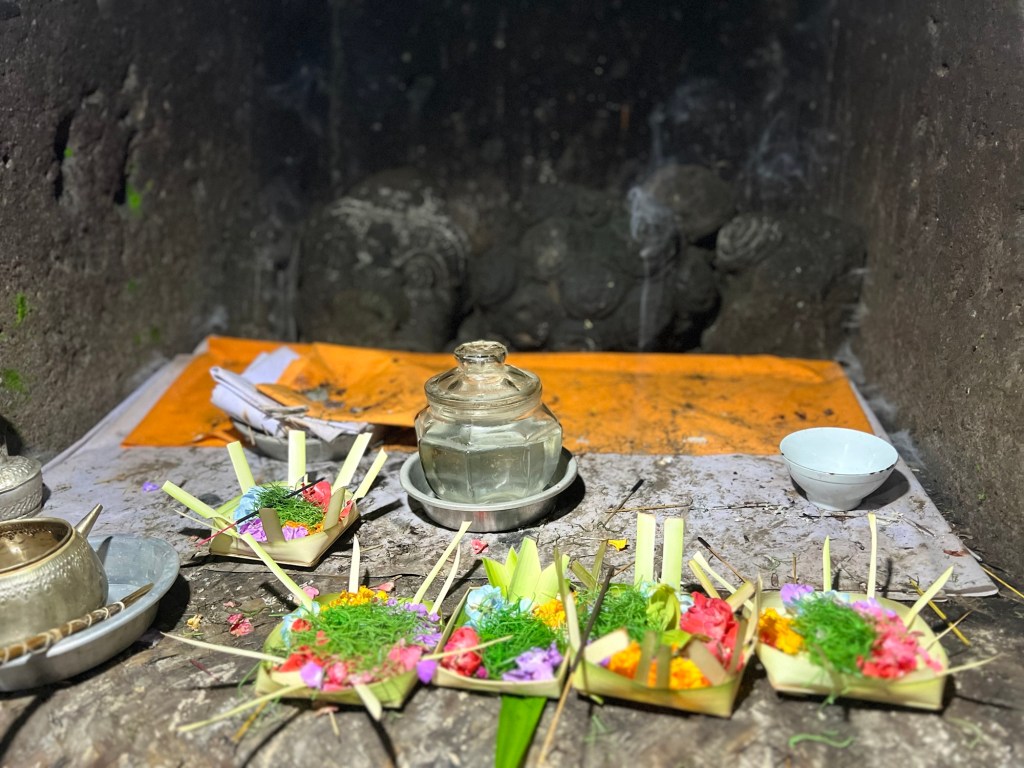
it’s a beautiful serene place. They also uncovered a bathing area separated for men and women


An elderly man offered to be a guide, we agreed because it supports local economy, though there was nothing to be guided about.

He spoke slowly, thoughtfully and smiled a lot. One of the traits that we have noticed is that the Balinese people takes pride in their culture and love to show them to others. Another way to look at this is that this place is a very tourist dependent region and the enthusiasm is understandable. Most of them recognised that we were from India even before we spoke. They have a faint sense of affinity with India.
Our next destination was the Archeological Museum or as the Balinese call it Arkeologi. The museum looks beautiful, in fact I found most of Ubud looks like a museum pieces. Perhaps to my touristy eyes all houses looked exotic.
Actually Balinese architecture is both beautiful and practical, designed to stay cool with high ceilings, open windows, and natural ventilation—though modern accommodations often include A/C.
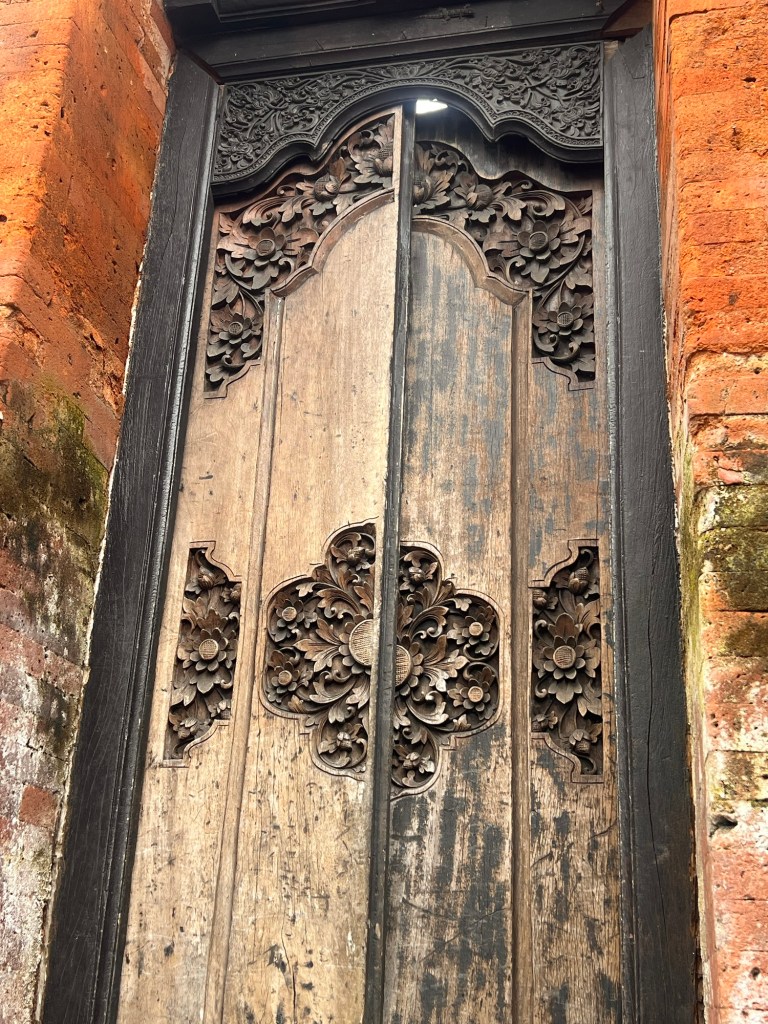
Traditional Balinese homes are walled compounds with multiple pavilions, including a household temple. They follow Asta Kosala Kosali, an ancient design philosophy similar to feng shui, which guides everything from layout to decoration, ensuring harmony between function, aesthetics, and spirituality


To come back to the Archeology museum …


Over 87 sarcophagi have been discovered in Bali, with similar structures found across the region. Indonesia also holds 60% of the world’s Homo erectus fossils.
The variety in sarcophagi shapes and sizes suggests advanced past societies, while ongoing megalithic burial practices in Sumba and Toraja highlight Nusantara’s enduring cultural traditions
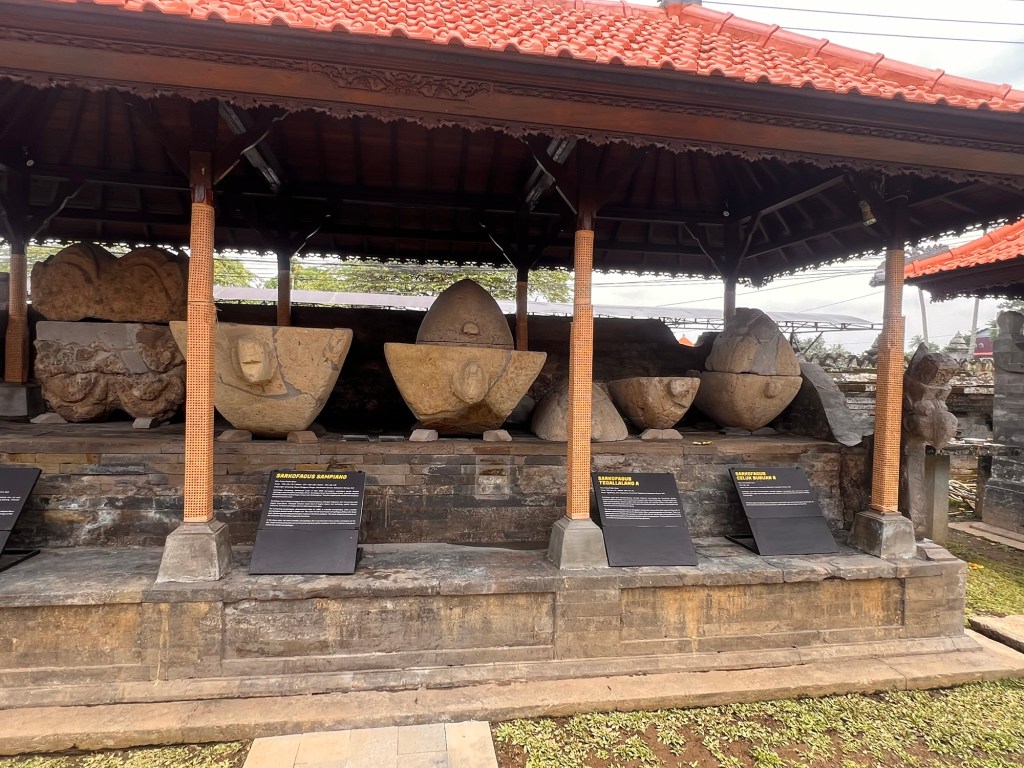


By the time we finished the museum, I almost melted away in the humidity and the heat. I am ever so thankful to the inventors of the facial tissue papers, my saviour during this trip.
However , with a historian for a daughter, the lighter touristy places were a strict no no for me.
Hence, the next trip was Temple Yeh Pulu. I patted my legs lovingly so that they give me company in yet another climbing and descending the steep, time worn stairs of yet another temple.
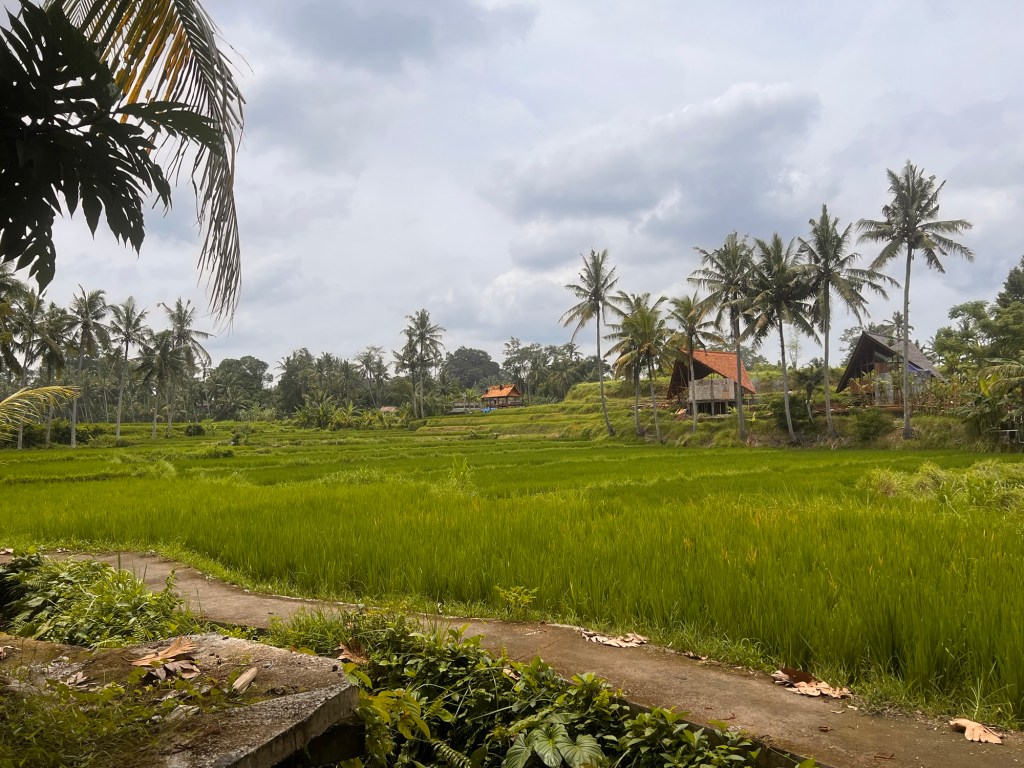
This temple is located in a village along with paddy fields, thatched huts and even a small resort. Long winding roads ambled along until we came to a clearing flanked by a beautiful spring and a stone carving in the yonder with mossed roads.
The relief of Yeh Putu lies in a valley that extends from north to south, it is bounded by a steep wall on the west side, a quite deep valley in the southern and eastern edges, this carved relief has a length of 25 meters. As reported by Nieuwenkamp, a Dutch painter, this relief was first discovered in 1925 with several restorations in 1949 and 1953 in order to protect the sandstone wall from abrasion of the rice field water above the wall.


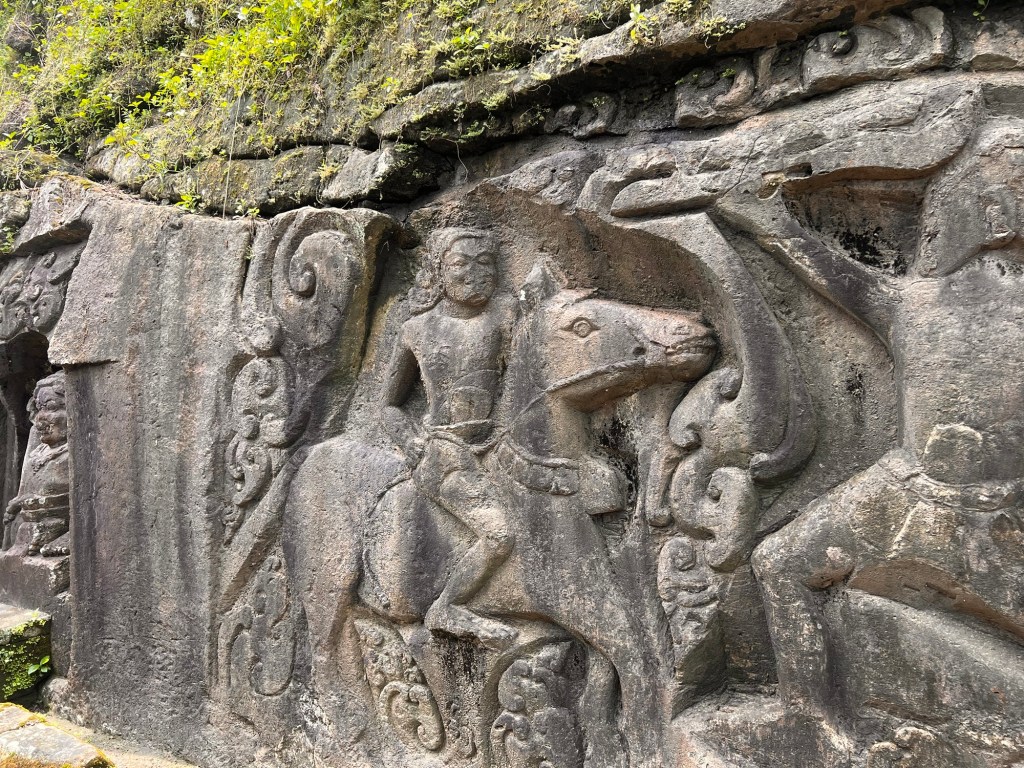
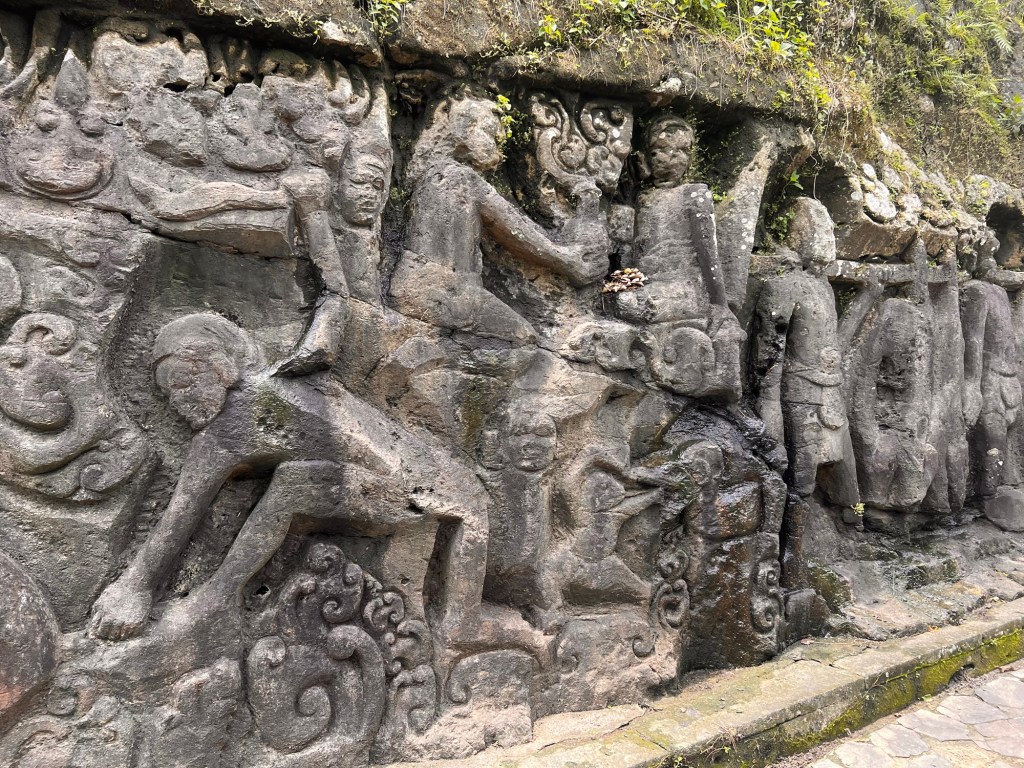
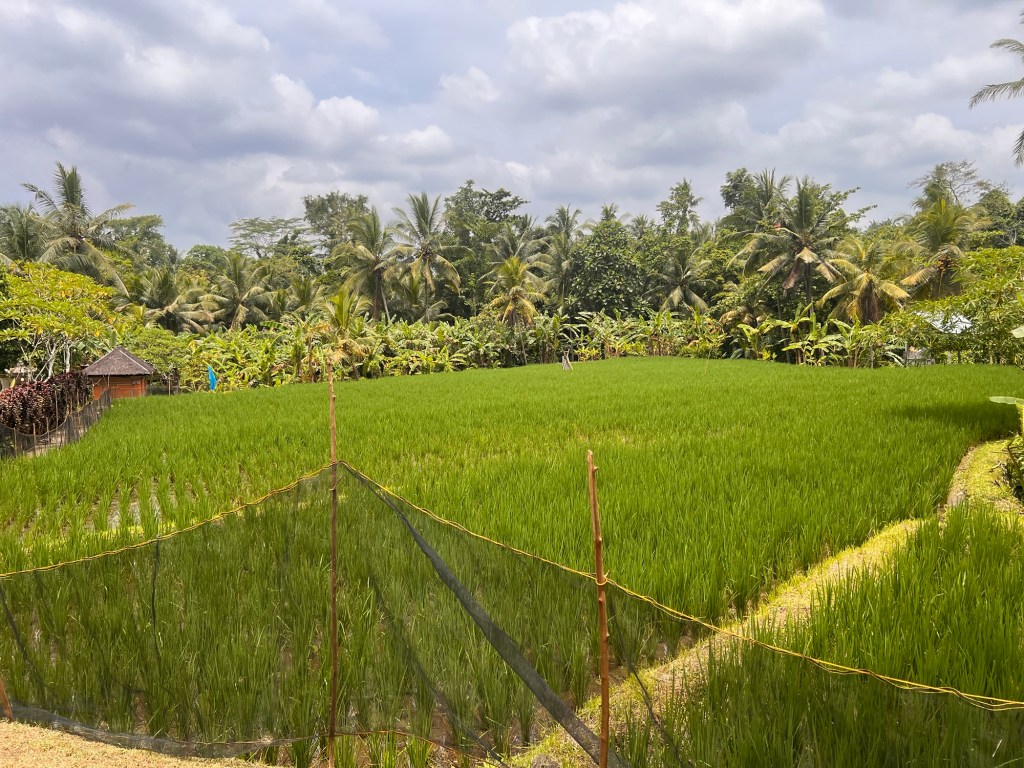
I felt very calm at Yeh Pulu … there was such an unhurried pace that exists in Bali. Everything has a rhythm and runs at its own pace, including the slow traffic on the main roads. No one shouts or honks, simply patiently wait for the car in front to move.
It was time to quench our thirst with something cold. Additionally, we had some time to kill before we went for lunch along with one of my daughters friends and her parents.

Lunch was at a place called Sun Sun Warun. Warun means restaurant in Balinese language. This was a Balinese restaurant. Leaving you with some of the beautiful architecture of the restaurant


And of course, the food 😀

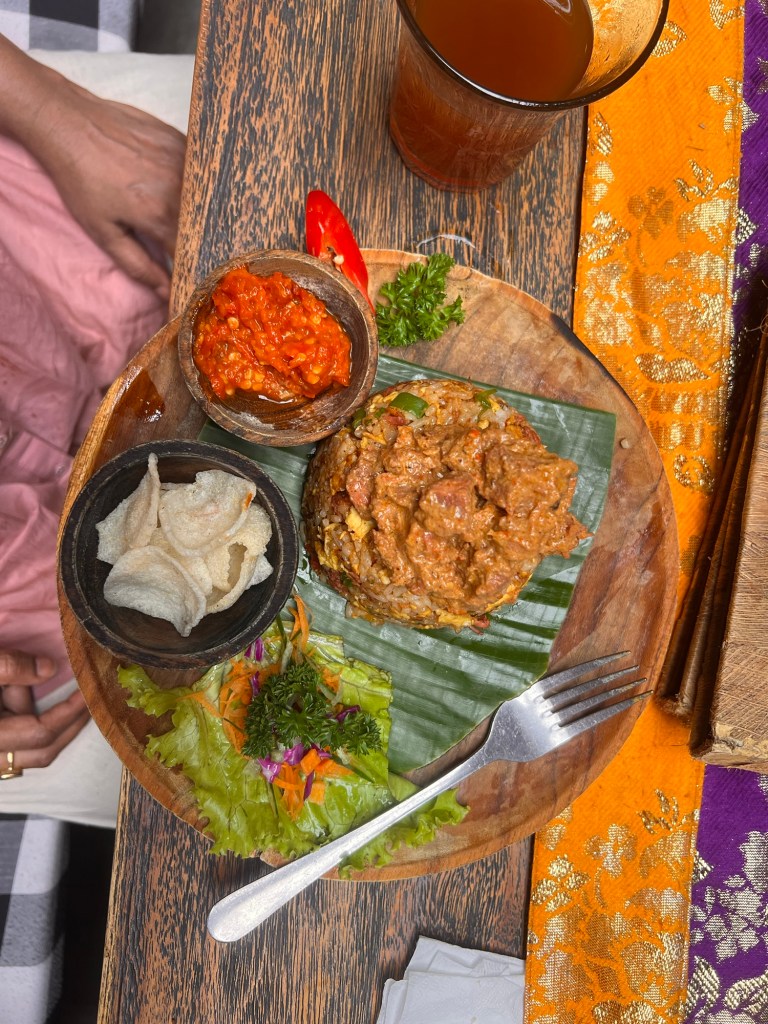
After that it was time for something cold shopping, getting back to the hotel for a swim and a massage.
I ended the day today with a deep conversation about class and caste with my daughter during dinner, who wondered why was her mother get into such intense subjects, and that too in Bali, after a nice swim and massage!!
This made us both 😂 out loud and yes, I need to tickle my funny bone or may be even discover whether it all exists for me. 😁

 Sarbari's Blog
Informative and interesting travelogue with a rich album of pictures.
LikeLike
Thank you Sanjayda!
LikeLike